BRANDING
July 1, 2026 · 2 min read
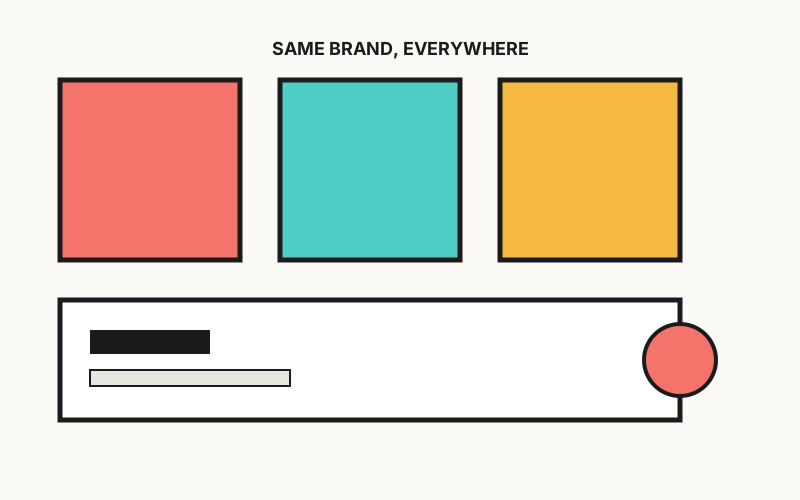
Why Your Brand Looks Different Everywhere
Inconsistent logos, colours, and tone across your website, social media, and invoices quietly erode trust. Here's how to fix it without a rebrand.
READ ARTICLEBeyond the hype and the fear, an honest look at where AI genuinely helps small businesses today, and where it doesn't.
Artificial intelligence went from science fiction to everyday tool faster than most business owners could keep up. One day your competitor was handwriting proposals; the next they were generating first drafts in seconds. It's easy to feel behind, or to dismiss the whole thing as hype. Neither reaction is quite right.
AI in 2026 is neither magic nor a replacement for your expertise. It's a capable assistant for specific tasks: drafting, summarising, brainstorming, analysing patterns, and handling routine queries. Used well, it gives small teams the output of much larger ones. Used poorly, it produces generic slop that customers can spot a mile away.
KEY INSIGHT
The businesses getting real value from AI treat it as a starting point, not a finish line. Every AI-generated output still needs your judgment, your voice, and your facts.
AI doesn't know your business the way you do. It can hallucinate facts, invent statistics, and produce confident-sounding nonsense. It can't replace relationships, read a room, or make judgment calls that require years of experience. And it shouldn't be making final decisions about pricing, hiring, or strategy without human oversight.
Customers are getting better at spotting generic AI content. The telltale signs: vague language, no specific examples, a tone that sounds like everyone else. If you use AI to write customer-facing content, you must edit heavily. Add your real stories, your actual numbers, your personality. Otherwise you're blending into a sea of sameness.
Pick one task you already do regularly: writing weekly social posts, summarising meeting notes, drafting client emails. Try doing it with AI assistance for two weeks. Compare the time saved and the quality of output. If it helps, expand. If it doesn't, you've lost nothing but an experiment.
PRACTICAL TIP
Never publish AI output without reading it carefully. One wrong fact or off-brand sentence can cost more than the time you saved.
July 1, 2026 · 2 min read
Inconsistent logos, colours, and tone across your website, social media, and invoices quietly erode trust. Here's how to fix it without a rebrand.
READ ARTICLE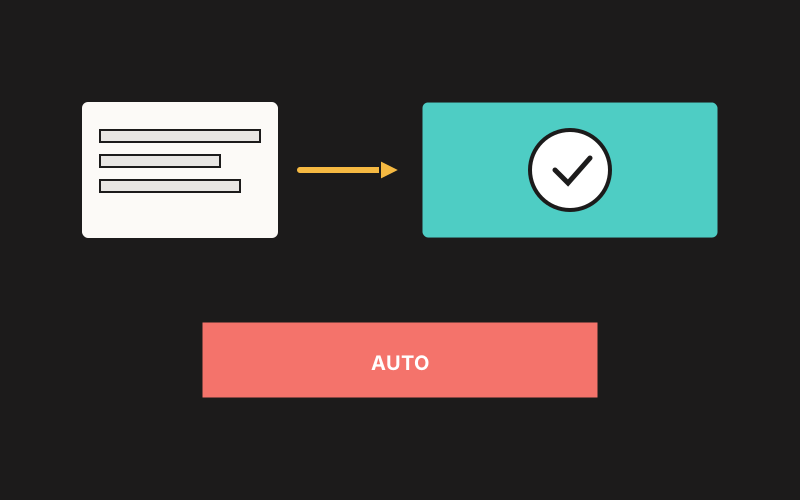
June 28, 2026 · 2 min read
If you or your team repeat the same steps every week, you're probably wasting hours that automation could give back. Here's where to start.
READ ARTICLESometimes a short conversation is worth more than a dozen articles. We're here when you're ready.